
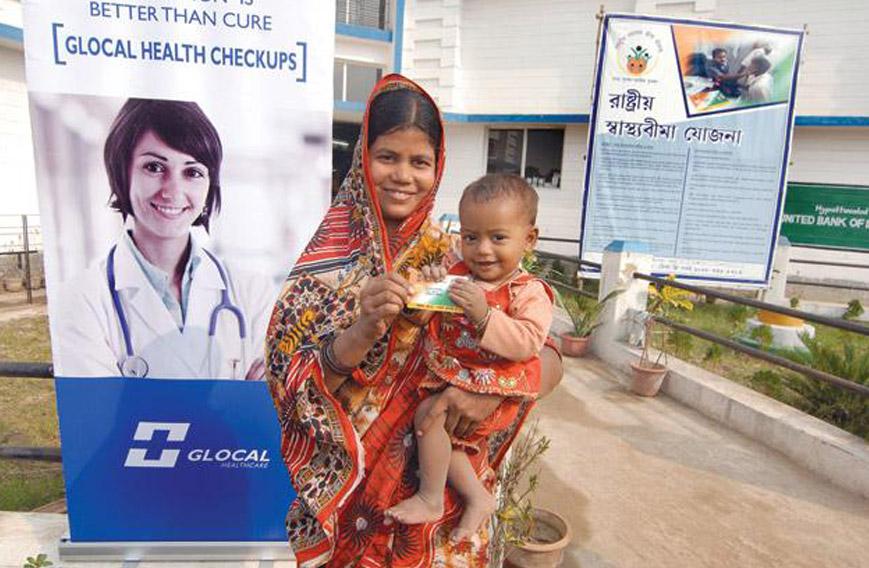


Harimati Das, 60, a destitute widow with no children, lives in Panchtupi, a remote village in Murshidabad district of West Bengal. When she was suffering from piles and fistula, kindly neighbours took her for treatment to the Khargram block, some 10 km away. They had heard that a spanking new hospital, clean as a whistle, had sprung up there. They praised this hospital for its caring staff and good food.
People were aware that it was a private hospital, but money was not an issue for the impoverished Harimati. After all, she owned the magic card – a piece of green plastic containing her biometric data – that the government had given her under the Rashtriya Swasthya Bima Yojana (RSBY), which is a health insurance scheme launched in 2008 for Indians living below the poverty line (BPL).