
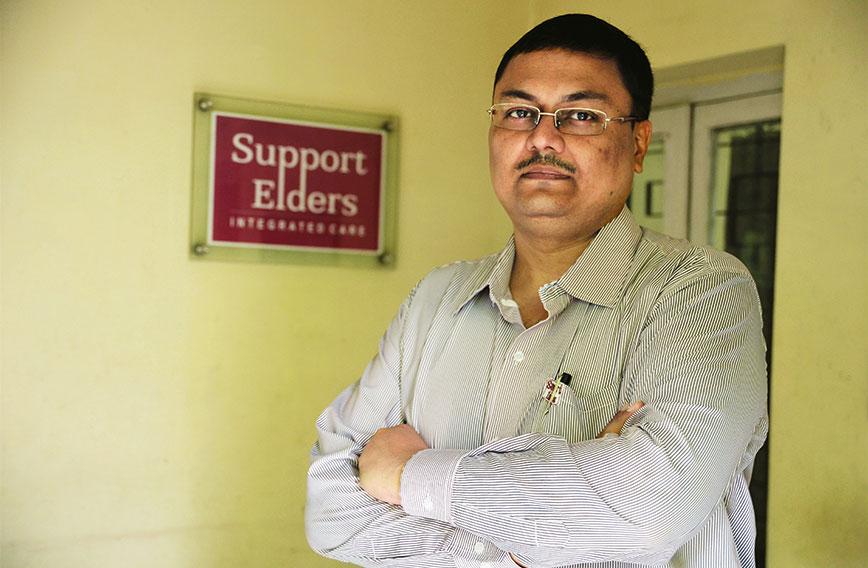


Mamata Dasgupta is 81, bright and cheerful. When our photographer and a Support Elders person visited her she herself got around and served them Bijoya sweets. Both her sons live abroad. Earlier she engaged the services of a succession of ayahs but that was not very satisfactory. Now, after engaging Support Elders, the biggest change is she has been relieved of all worries. She knows someone will be there by her side as soon as she calls.
Three social developments have come together in India in recent times. One, with people living longer, particularly among the better-off, the number of the aged is rising rapidly. Two, not only has the joint family given way to the nuclear family, grown-up and earning offsprings have tended to move away from parental homes. Three, after the fall of the Berlin Wall and socialist governments and the global spread of the capitalist system, a hybrid has emerged — social entrepreneurship. It seeks to merge the capitalist form of business with social concerns. This enables social objectives to be pursued without undue dependence on philanthropy, thus allowing them to become robust and self-sustaining. Some profit is sought to be made but profit maximisation is not the sole objective.